AI video is only as good as the humans behind it
Here's how we use AI video and why craft still makes the difference.
Posted on
Filed under
AI & LLMs

18/2
The Promise and the Problem with AI Video
There's no shortage of AI video tools right now. Text-to-video platforms, AI voiceover generators, AI image synthesis, motion tools: they're all widely available, affordable, and getting better every month. The barrier to creating video content has never been lower.
And that's exactly the problem.
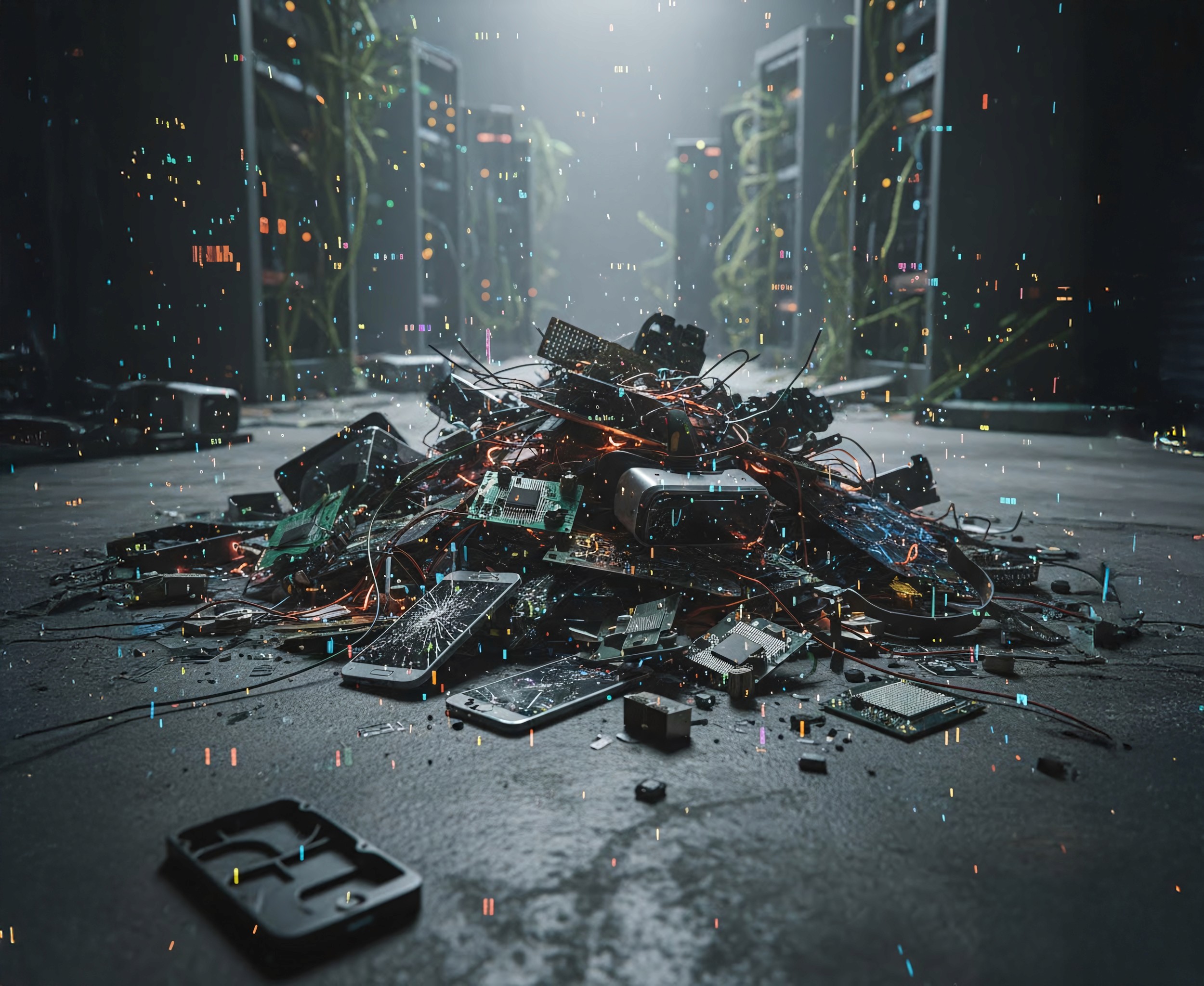
When everyone has access to the same tools, output converges. Scroll through social media long enough and you'll notice it: the same uncanny movement, the same sterile compositions, the same AI voice reading the same generic script. It's what the industry has started calling 'slop': content produced fast and cheap, but without the creative intelligence to make it actually work.
We've been deep in the world of AI video advertising for some time now. Our work in this space sits at the intersection of technology and craft, and we've learnt that the tools are only as powerful as the people using them.
Our Approach: A Hybrid of AI and Traditional Technique
Our AI video advertising work draws from multiple disciplines: AI video generation, AI imagery, AI voiceover, traditional videography, Photoshop, and careful manual editing, woven together through an iterative creative process. Here's what that actually looks like in practice.
AI Video Generation
We use AI video models to generate footage that would be prohibitively expensive to film traditionally: abstract environments, conceptual visuals, and high-production-value backgrounds that would require a full crew and set budget. These tools have dramatically reduced the cost of certain types of creative production, and that saving gets passed on to our clients.
But here's what most agencies won't tell you: getting consistent, usable output from AI video requires dozens, sometimes hundreds, of iterations. The models don't always do what you ask. Prompting is a skill in itself, and knowing when to scrap a generation versus refine it is something that only comes with experience and a trained visual eye.
AI Imagery and Photoshop
Still imagery generated through AI tools forms the visual foundation for many of our video projects. But raw AI-generated images rarely hit the mark straight out of the model. They need refinement: colour grading, compositing, element removal, texture adjustments, all of which require professional Photoshop skills and a strong understanding of design principles.
We regularly combine AI-generated imagery with traditionally sourced photography, blending the two so seamlessly that the join is invisible. This gives us the best of both worlds: the speed and flexibility of AI with the authenticity and precision of traditional image work.

AI Voiceover and Sound
AI voice technology has advanced rapidly, and we use it regularly for voiceovers, particularly for clients who need fast turnaround or multilingual content. But selecting the right voice, writing copy that sounds natural when spoken by an AI voice, timing the delivery, and mixing audio at a professional level all require skills that have nothing to do with the technology itself.
An ear for sound: pacing, tone, how audio sits against music and motion, is something you develop over years of production experience. AI can generate the voice. It can't tell you whether it sounds right.
Traditional Videography: When It's Needed
AI video is not a replacement for traditional videography. It's an addition to the toolkit. There are categories of content where AI simply doesn't hold up, and physics is the clearest example.
Current AI video models struggle with realistic fluid dynamics, complex object interactions, human hands, and any scenario where the laws of physics need to be convincingly portrayed. Pouring a glass of water. A handshake. A product being picked up and used. These are areas where traditional camera work is still the right call, and where trying to force AI into the job produces exactly the kind of slop we're trying to avoid.
We make these calls on a project-by-project basis, recommending the right mix of AI and traditional production depending on the brief, the budget, and the output we're trying to achieve.
AI Video Is Primarily Short Form, For Now
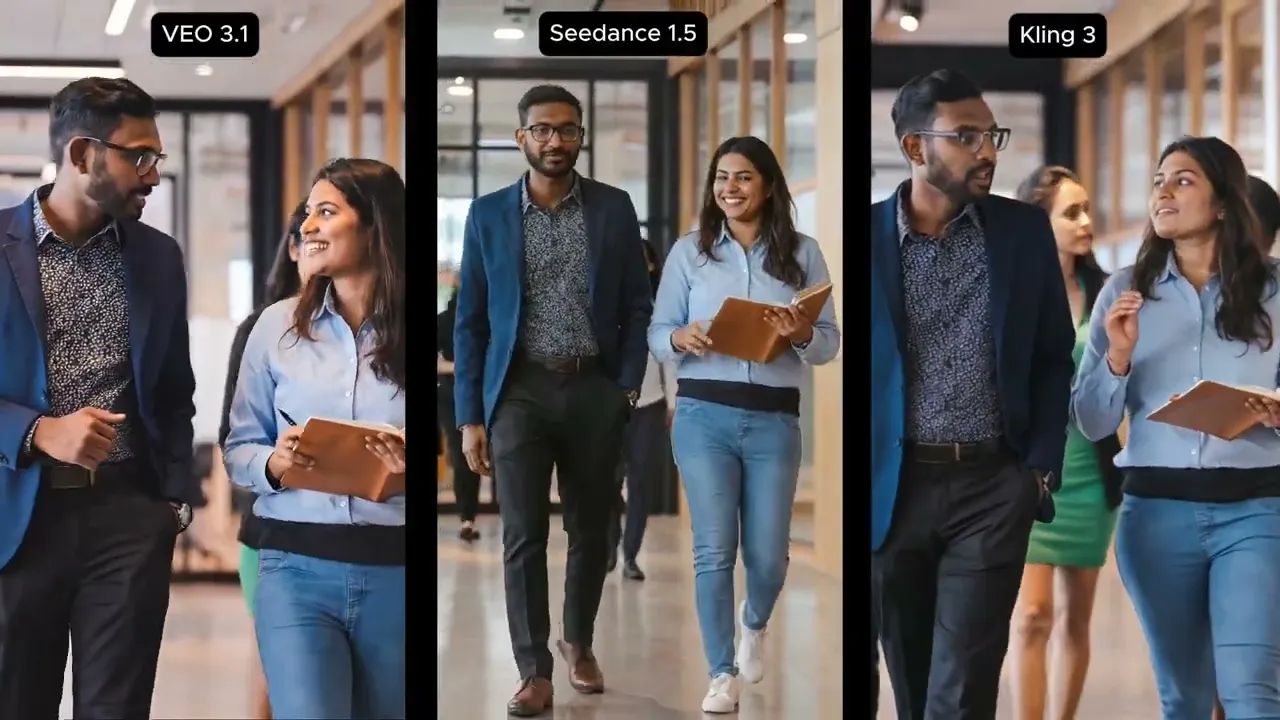
One important reality of working with AI video at this stage is that it is largely a short-form medium. Maintaining visual consistency across longer run times is genuinely difficult. Characters shift slightly between scenes, environments drift, and the cumulative effect of small inconsistencies becomes impossible to ignore once you're working with footage beyond a certain length.
For longer-form productions that require a consistent cast, environment, or narrative thread, traditional videography remains the more reliable approach. But for short-form content, this limitation is largely irrelevant, and that's precisely where AI video shines.
Digital advertising is the ideal use case. Fifteen-second social ads, six-second pre-rolls, short punchy content built for quick edits and fast-moving visuals: these formats play directly to AI video's strengths. The iterative generation process becomes an asset rather than a liability, because you can produce multiple creative variations quickly and test them against each other in ways that traditional production budgets simply don't allow.
Where This Is Heading
This landscape is changing quickly. Early reports from Seedance 2.0 suggest that long-form video production may be within reach for AI models sooner than many expected. Whether this translates effectively into practical agency workflows remains to be seen: consistency, editability, and the ability to integrate with existing production pipelines are all factors that will determine whether the technology is genuinely useful at scale or still requires significant human intervention to get there.
Other AI video models will undoubtedly advance in parallel. The pace of development across the category makes any firm prediction about the two-year horizon fairly unreliable. What isn't in doubt is the direction of travel: AI video will become an increasingly significant part of how content is produced in an agency environment. The question isn't whether to engage with it, but how to build the skills and processes now that will make that engagement genuinely valuable rather than another source of generic output.
We're watching these developments closely and updating our approach as the tools evolve. That's part of what it means to work with this technology seriously rather than just picking up whatever is available and calling it done.
What Separates Creative AI Work from Slop
The tools are available to everyone. What isn't universally available is the combination of skills that makes those tools produce something worth watching.
Artistic eye: the ability to look at a frame and know whether it works, whether the composition draws the eye where it should, whether the colour palette is telling the right story. This isn't something you develop by prompting an AI. It comes from years of studying design, film, and visual communication.
Critical thinking in the edit: video editing is decision-making under creative pressure. What stays, what goes, what order tells the story most effectively, where the cut falls. These decisions shape whether a 30-second ad holds attention or loses it in the first three seconds. AI can generate footage. It cannot make the editorial judgements that turn that footage into a compelling narrative.
Pacing and storytelling: great video has a rhythm. The best AI-assisted productions we've created have been built around strong narrative frameworks first, with AI tools used to realise specific creative moments within that structure. Story first, tools second. Always.
An ear for sound: music selection, audio mixing, voiceover timing, the way sound design reinforces the visual story. These are skills that require genuine musical and production sensibility. Bad audio will kill good video every time.
AI Reduces Cost. It Doesn't Replace Craft.
This is the most important thing we want people to take away from our work in AI video advertising: AI is a cost-reduction tool, not a quality shortcut. In the right hands, it makes ambitious creative work accessible to budgets that couldn't previously support it. In the wrong hands, it produces content that actively damages brand perception.
The businesses investing in AI video production right now are divided into two camps: those treating it as a cheap alternative to proper production, and those treating it as an extension of their creative capability. The output from those two camps looks completely different. And audiences can feel it, even if they can't articulate why.
Our approach sits firmly in the second camp. We invest in the iterative process, the refinement, the traditional skills that wrap around the AI tools and make the final product something audiences actually respond to.
Want to See What This Looks Like in Practice?
Take a look at our AI video advertising work to see the kind of output that comes from combining the best of AI technology with serious creative craft. If you're considering AI video for your brand and want to understand what's possible within your budget, we'd be happy to talk through what the right approach looks like for your specific goals.
AI video advertising is one of the most exciting creative opportunities available to brands right now. The window where doing it well is a genuine differentiator won't stay open forever. The agencies that build the skills and processes now will be the ones producing standout work when the technology becomes even more democratised.
The Promise and the Problem with AI Video
There's no shortage of AI video tools right now. Text-to-video platforms, AI voiceover generators, AI image synthesis, motion tools: they're all widely available, affordable, and getting better every month. The barrier to creating video content has never been lower.
And that's exactly the problem.
When everyone has access to the same tools, output converges. Scroll through social media long enough and you'll notice it: the same uncanny movement, the same sterile compositions, the same AI voice reading the same generic script. It's what the industry has started calling 'slop': content produced fast and cheap, but without the creative intelligence to make it actually work.
We've been deep in the world of AI video advertising for some time now. Our work in this space sits at the intersection of technology and craft, and we've learnt that the tools are only as powerful as the people using them.
Our Approach: A Hybrid of AI and Traditional Technique
Our AI video advertising work draws from multiple disciplines: AI video generation, AI imagery, AI voiceover, traditional videography, Photoshop, and careful manual editing, woven together through an iterative creative process. Here's what that actually looks like in practice.
AI Video Generation
We use AI video models to generate footage that would be prohibitively expensive to film traditionally: abstract environments, conceptual visuals, and high-production-value backgrounds that would require a full crew and set budget. These tools have dramatically reduced the cost of certain types of creative production, and that saving gets passed on to our clients.
But here's what most agencies won't tell you: getting consistent, usable output from AI video requires dozens, sometimes hundreds, of iterations. The models don't always do what you ask. Prompting is a skill in itself, and knowing when to scrap a generation versus refine it is something that only comes with experience and a trained visual eye.
AI Imagery and Photoshop
Still imagery generated through AI tools forms the visual foundation for many of our video projects. But raw AI-generated images rarely hit the mark straight out of the model. They need refinement: colour grading, compositing, element removal, texture adjustments, all of which require professional Photoshop skills and a strong understanding of design principles.
We regularly combine AI-generated imagery with traditionally sourced photography, blending the two so seamlessly that the join is invisible. This gives us the best of both worlds: the speed and flexibility of AI with the authenticity and precision of traditional image work.
AI Voiceover and Sound
AI voice technology has advanced rapidly, and we use it regularly for voiceovers, particularly for clients who need fast turnaround or multilingual content. But selecting the right voice, writing copy that sounds natural when spoken by an AI voice, timing the delivery, and mixing audio at a professional level all require skills that have nothing to do with the technology itself.
An ear for sound: pacing, tone, how audio sits against music and motion, is something you develop over years of production experience. AI can generate the voice. It can't tell you whether it sounds right.
Traditional Videography: When It's Needed
AI video is not a replacement for traditional videography. It's an addition to the toolkit. There are categories of content where AI simply doesn't hold up, and physics is the clearest example.
Current AI video models struggle with realistic fluid dynamics, complex object interactions, human hands, and any scenario where the laws of physics need to be convincingly portrayed. Pouring a glass of water. A handshake. A product being picked up and used. These are areas where traditional camera work is still the right call, and where trying to force AI into the job produces exactly the kind of slop we're trying to avoid.
We make these calls on a project-by-project basis, recommending the right mix of AI and traditional production depending on the brief, the budget, and the output we're trying to achieve.
AI Video Is Primarily Short Form, For Now
One important reality of working with AI video at this stage is that it is largely a short-form medium. Maintaining visual consistency across longer run times is genuinely difficult. Characters shift slightly between scenes, environments drift, and the cumulative effect of small inconsistencies becomes impossible to ignore once you're working with footage beyond a certain length.
For longer-form productions that require a consistent cast, environment, or narrative thread, traditional videography remains the more reliable approach. But for short-form content, this limitation is largely irrelevant, and that's precisely where AI video shines.
Digital advertising is the ideal use case. Fifteen-second social ads, six-second pre-rolls, short punchy content built for quick edits and fast-moving visuals: these formats play directly to AI video's strengths. The iterative generation process becomes an asset rather than a liability, because you can produce multiple creative variations quickly and test them against each other in ways that traditional production budgets simply don't allow.
Where This Is Heading
This landscape is changing quickly. Early reports from Seedance 2.0 suggest that long-form video production may be within reach for AI models sooner than many expected. Whether this translates effectively into practical agency workflows remains to be seen: consistency, editability, and the ability to integrate with existing production pipelines are all factors that will determine whether the technology is genuinely useful at scale or still requires significant human intervention to get there.
Other AI video models will undoubtedly advance in parallel. The pace of development across the category makes any firm prediction about the two-year horizon fairly unreliable. What isn't in doubt is the direction of travel: AI video will become an increasingly significant part of how content is produced in an agency environment. The question isn't whether to engage with it, but how to build the skills and processes now that will make that engagement genuinely valuable rather than another source of generic output.
We're watching these developments closely and updating our approach as the tools evolve. That's part of what it means to work with this technology seriously rather than just picking up whatever is available and calling it done.
What Separates Creative AI Work from Slop
The tools are available to everyone. What isn't universally available is the combination of skills that makes those tools produce something worth watching.
Artistic eye: the ability to look at a frame and know whether it works, whether the composition draws the eye where it should, whether the colour palette is telling the right story. This isn't something you develop by prompting an AI. It comes from years of studying design, film, and visual communication.
Critical thinking in the edit: video editing is decision-making under creative pressure. What stays, what goes, what order tells the story most effectively, where the cut falls. These decisions shape whether a 30-second ad holds attention or loses it in the first three seconds. AI can generate footage. It cannot make the editorial judgements that turn that footage into a compelling narrative.
Pacing and storytelling: great video has a rhythm. The best AI-assisted productions we've created have been built around strong narrative frameworks first, with AI tools used to realise specific creative moments within that structure. Story first, tools second. Always.
An ear for sound: music selection, audio mixing, voiceover timing, the way sound design reinforces the visual story. These are skills that require genuine musical and production sensibility. Bad audio will kill good video every time.
AI Reduces Cost. It Doesn't Replace Craft.
This is the most important thing we want people to take away from our work in AI video advertising: AI is a cost-reduction tool, not a quality shortcut. In the right hands, it makes ambitious creative work accessible to budgets that couldn't previously support it. In the wrong hands, it produces content that actively damages brand perception.
The businesses investing in AI video production right now are divided into two camps: those treating it as a cheap alternative to proper production, and those treating it as an extension of their creative capability. The output from those two camps looks completely different. And audiences can feel it, even if they can't articulate why.
Our approach sits firmly in the second camp. We invest in the iterative process, the refinement, the traditional skills that wrap around the AI tools and make the final product something audiences actually respond to.
Want to See What This Looks Like in Practice?
Take a look at our AI video advertising work to see the kind of output that comes from combining the best of AI technology with serious creative craft. If you're considering AI video for your brand and want to understand what's possible within your budget, we'd be happy to talk through what the right approach looks like for your specific goals.
AI video advertising is one of the most exciting creative opportunities available to brands right now. The window where doing it well is a genuine differentiator won't stay open forever. The agencies that build the skills and processes now will be the ones producing standout work when the technology becomes even more democratised.
Author

Steven Donald
Chief Strategist
With over 30 years of experience across all facets of digital marketing, Steven Donald brings this expertise to his role as Chief Strategist at Pure Agency. Having navigated every evolution from early digital transformation to today's AI-driven landscape, Steven possesses a unique perspective on what truly drives performance.